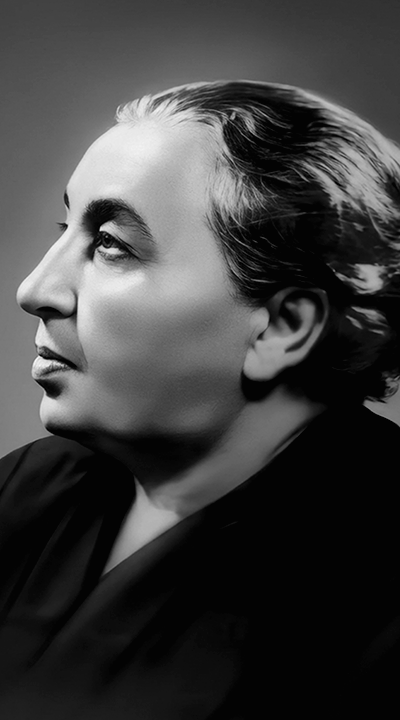
Kadio Sigala was born Kadio Nomikou into the eponymous shipping and seafaring family on the island of Santorini at a time when women were not expected to pursue careers in business.
As convention demanded, at the age of 15 she married a ship’s captain, George A. Sigalas, whose family had a record of owning sailing vessels in the 19th century. She purchased the first of a series of sailing ships the couple would own with the wedding dowry received from her father.
While Capt Sigalas continued the life of a seafarer as master on board the family ships, Kadio managed the business – from buying and selling of ships, to crewing, finance and accounting. Remarkably, she combined this with running the household, including giving birth 14 times and rearing the seven children who survived to grow up.
There was a sentimental link between the two. As she later recorded in her diary: “for every purchase, a birth”. Eventually, she would marry three of her four daughters to men involved in shipping. Her first daughter, for example, was married to Spyros Alafouzos, a Santorinian ship’s captain living in Russia.
She purchased a first steamship during World War I and by the first years of the interwar period the fleet numbered three steamships. At the age of 40 in 1922, she moved from Santorini to Piraeus, the emerging hub of Greek shipping.
The 1920s and early 1930s were a tough period and twice the business flirted with ruin. The business was not a one-woman show – two sons and two of her sons-in-law who were master mariners provided support. But Kadio’s determined personality, religious faith and assistance from shipping relatives, notably her first cousin Loucas Nomikos, kept the business afloat.
Insurance proceeds of £7,000 from a 58 year-old freighter helped the family purchase a string of vessels during the 1930s, starting with a 1908-built cargo ship that she named Ais Georgis, after her father, Captain George Nomikos. Prior to the Second World War, she had established a fortune and invested in property, in Piraeus, the centre of Athens and the northern suburbs and outskirts of the capital. She spent the war in Kifissia, where she had a property with an orchard.
Four of the family’s six vessels were sunk during the war. Kadio’s contacts in the maritime world made her aware of the efforts of Greek shipowners led by Manuel Kulukundis and including the likes of Costas M. Lemos and Stratis Andreadis to obtain war-surplus Liberty vessels in compensation for the horrendous losses suffered by the Greek-owned fleet. The family was successful in obtaining one of the original 98 Liberties allotted to Greece by the American government.
This was the 1943-built John F. Myers, by far the youngest merchant vessel she had acquired. She authorised her son Alexandros to go to the US and take charge of the vessel, that was transferred in April 1947, renamed Santorini and registered under Greek flag.
The previous year, the company purchased two three-year-old Canadian-built naval vessels that had participated in the Allied war effort as convoy escorts during the Battle of the Atlantic. The steam-powered pair were converted in 1946 and deployed in the local passenger trades. The S.S. Kadio, formerly the Canadian navy corvette Owen Sound, operated between Marseilles, Genoa, Piraeus, Limassol, Beirut, Haifa and Alexandria. The ‘River-class’ frigate HMS Lossie was converted into the Teti and operated in the coastal passenger trades. It was sold to Typaldos Bros in 1954.
In 1953, she purchased a three-storey house in Kolonaki, taking one floor for herself while the others accommodated her son Alexandros and daughter Tassia. She used her living room as an office and was visited there by her captains, crew members, lawyers, accountants as well as by officials invcluyding the then-minister of shipping.
Kadio was already 70 when, reluctantly, she ceded day-to-day management of the business to the next generation. As a shipowner she maintained a strong belief in using her own savings and a horror of debt, as well as fierce loyalty to Santorini.
In her diary, she expressed disappointment that she did not see her sons investing in shipping. Underlining her passion for the industry, she respected “what the sea brings” above all.
Her diary was the basis for a dramatised account of her extraordinary life, ‘The Upper Side of the World’, by author Kadio Kolymva, Kadio Sigala’s granddaughter. One anecdote told by Ms Kolymva underlines the extent to which Sigala’s unique position as a woman shipowner of that period was widely known in the Greek maritime world.
One day Kadio Sigala was recognised by Aristotle Onassis in a hotel dining room at Loutraki, a spa outside Athens, and the legendary shipowner asked Kolymva, then a small girl, to tell her grandmother that she was the one he esteemed beyond anyone else in shipping. “My grandmother sent wine to their table and was very pleased by the recognition,” she related.